Friday, May 26, 2006

Summer Travels

Vacation Time after Graduating from CSU :-)

* Chicago, IL * Providence, RI * Boston, MA * Cleveland, OH * Pittsburgh, PA * Los Angeles, CA * Summer advisor at Brandeis Collegiate Institute in California

BOSTON, MA

Holocaust Memorial on a street near Quincy Market in Downtown Boston


Each pillar has 1,000,000 numbers. Each representing a tatoo that was branded on Holocaust victums.

The etched numbers reach up to the sky as a tribute to those in our memory. (Up close picture on right)

It was also really neat to see the mixture of old historic buildings and new modern buildings attached like this building...

Wednesday, May 10, 2006

Ecselance International @ Lincoln Center

Ecselance International hosted a micro-financing reception at the Lincoln Center this past week. Interns Beth, Amy, and myself shared our stories of the experiences we had working with the village communities in India. Vinod Parekh, director of Human Development Services based in Nashik, India (and my host with his with Kamala during my stay in Belgaon Dhaga) was the keynote speaker at the event.

PHOTOS OF THE EVENT

Wednesday, January 25, 2006

Fun Gigs

This Tuesday, I got to play violin for a Mardi Gras Themed Retirement Party of Peggy Meis, the Financial Aide Advisor that was THE person responsible for my admission and scholarship at CSU. People were dancing and laughing, and the event was almost as fun as being in Baton Rouge itself! It was an extremley fun honor to get dressed up for Peggy's party!


This Friday, I'll be playing violin with Clayton Risner at The Avenue for a Multiple Scelrosis Benefit Concert. Tickets are $5 at the door, and all proceeds will benefit the victums of M.S.

Tuesday, January 03, 2006

Speaker Series

Wow! Our last day in Israel on the Hillel Biz & Tech Program was packed with info!

I've got random bits online right now (more to come), and we'll be hopefully getting most of the powerpoints shared with us over the trip available for download online soon.

Sherwin B. Pomerantz sharing information about Atid EDI

Jonathan Medved sharing insights on Branding Israel through the company Israel Seed

Eli Kazhdan with StartUp Jerusalem

Monday, January 02, 2006

Jerusalem Touring

Finally as the speakers, programming, and running around Israel begins to wind down our and relationships with other participants on this track begin to grow, our trip is coming to a close. None-the-less, this trip provided many unique insights and connections that will hopefully develope into meaningful relationships.

We've had so much information to process, our brains of full of potently powerful entrepreneurial mush. For Joey from Penn puts it, "The only thing that's keeping me sane is a combination of falafel, tea, and Judiasm."

Today, we visited IDT followed by Hebrew University. Fun and friendly tour guides shared their passion and experiences at HU. Followed by an explanation by Yakir Sagev of the student run program New Spirit. His attitude was truely Israeli, taking the process of business planning "as it comes." This style of planning day-by-day was hard to believe could work for an organization that is dedicated to making constructive connections between students and businesses, but hey, that's Israel - a country designed to be adaptable to its ever changing political and cultural climate.

Adapting to this climate.

Sunday, January 01, 2006

Re'ut Institute

The progressive high tech industry in Israel has been driving it to become a leading player in the global economy. However, weak government structures and policies have been a huge barrier to Israel reaching its full potential.

Gidi Grinstein discussed with us today how the work of the Re'ut Institute is designed to transform the strategy of their clients (in this case, the Israeli government) by providing a methodological analysis and feedback to make government agencies more efficient.

Thursday, December 29, 2005

Ein Gev


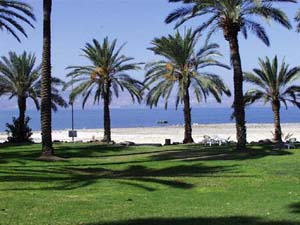
This is a picture from our bungalow on the coast of the Sea of Galilee. Today, we will be visiting Technion University, one of the world's leading technology research institutions to explore entrepreneurship and innovation. Following our tour of Technion Labratories, we will stop by the Center for Jewish Arab Economic Development before returning to our resort weekend spot for this weekend's Hillel Shabbaton: joined by 3 other Hillel tracks - hundreds of engaged Jewish college students together for the last Shabbat of the American New Year and the final nights of Hanukkah.

Amazing Itinerary

After just 2 days in Israel with the Hillel Business & Technology Mission, our program of 85 students from over 50 different universities in America and Canada have already had the opportunity to meet several professionals in various Israeli industries including:

* Aluf Benn, Journalist, Haaretz
* Yossi Vardi, venture capitalist and creator of ICQ technolgoy
Mr. Vardi discussed with us the entrepreneurial role that young people play in Israel’s private and research sectors
* Alisa Peled, writer of Debating Islam in the Jewish State
Dr. Peled discussed Trends in Middle East Economics
* Jay Pomrenze, CEO of E4X Inc
* Nir Brunstein, Director of Poalim Capital Markets Group

Also, we have visited Weizman Institute, one of the leading research and developement institutes in the world, the Tel Aviv Stock Exchange, and Raphael Recanati International School the first private university in Israel.

An amazing trip so far with a lot more to come...

Tuesday, December 27, 2005

In Flight

It was nice spending time with the cousins in Kew Gardens. I got to meet a few dozen of Chani’s relatives at a “Pre-Hanukkah” party on Christmas Eve.

The flight to Israel went by very quickly. Traveling 23 hours to India (with several hours lay-over at the International Airport in Seoul, South Korea) was the longest journey I’ve ever taken. So this 10 hour trip across the Atlantic only felt like a short flight in America across the Mississippi River.

Unfortunately, I caught a cold as we flew over Newfoundland, and my El Al in flight meals were replaced with cups of hot tea. Though my throat felt like a dried up baguette as we had breakfast flying over France, my head stopped spinning as we raced past Rome and the Tyrrhenian Sea.

On the bright side, I seem to always get sick when traveling to Israel, and hopefully I’ve gotten the worst out of the way, as we get ready to begin our Business and Technology program sponsored by Hillel. First stop: Kibbutz Shefaim Hotel to light the 3rd night of Hanukkah candles.

Monday, December 26, 2005

New York City

I arrived in NYC on the last day of the MTA bus/train strike. Walking over 200 blocks from Chinatown - Uptown - and all 'round actually wasn't that bad. I got to see parts of the city that I'd usually just fly right past underground on the subway.


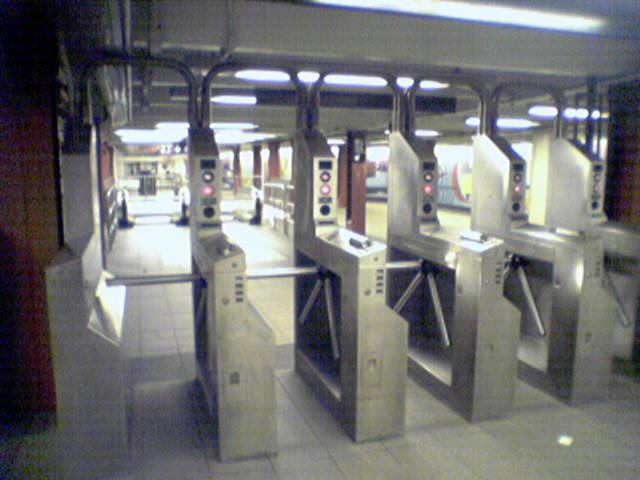
Here's a picture of Rush Hour at one of the main subway stops near Time Square on Thursday, December 22nd, 2005 - The last day of the MTA Strike.


I arrived in NYC on the last day of the MTA bus/train strike. Walking over 200 blocks from Chinatown - Uptown - and all 'round actually wasn't that bad. I got to see parts of the city that I'd usually just fly right past underground on the subway.


Here's a picture of Rush Hour at one of the main subway stops near Time Square on Thursday, December 22nd, 2005 - The last day of the MTA Strike.

Thursday, December 22, 2005

Washington DC


My 3 days in Washington DC visiting Elise were great! Elise works at The U.S. State Department. This picture is on the 8th floor of the State Department Building. We are standing next to the desk that Thomas Jefferson used to sign the Declaration of Independence.

Tuesday, December 20, 2005

The Nation's Capital

Spending a few days in our Nations Capitol was a great way to begin my winter break from Colorado State University. It was good to catch up with Elise Mellinger, and take a tour of the Diplomatic Reception Hall on the top floor of The State Department Building.

Elise now works the SE desk with a fellow colleague from FSI and other SD representatives covering TS information about FSO. I attended a holiday party hosted by OSE and SA while TBE was focused on SI. Ok, so I made up a few of those abbreviations, but half the job at the State Department seems to be getting all the acronyms in order! In civilian terms, Elise is currently working in the Office of Southern Europe.

It was really nice to be riding the metro around Georgetown and DC, as I was attempting to wait out the transportation strike that was announced in New York City. By Thursday, I took a bus from DC Chinatown to the NYC Chinatown for $20, and was ready to get some exercise in bustling bus-less Manhattan.

Monday, November 07, 2005

Indiana

It doesn't matter if life drifts by like a warm summer breeze or a chilling winter frost; we have to remember everyday to take the time to make it mean something.

Last week, I took a trip to Indiana. It was my first time seeing the green landscape and amazing fall colors in the quaker countryside of the northern side of our country's bible belt.

I had an amazing time with Professor Tim Scales and Students In Free Enterprise India Delegate, Johann DeSales. They filmed me as a violin entrepreneur for a segment of "In Your Business." A television show to debut in Richmond, Indiana later this month.

We also visited the Wernle Children's Home and gave a motivational speech to the children who are restoring hope and rebuilding relationships for a better life.

Remember to make the most of today, because tomorrow it will only be another yesturday ~

Tuesday, September 20, 2005

Final Descent

Adjusting back to the U.S. was more subtly gripping than I imagined.

I was truly becoming a new person at the end of my 8 month journey around the world, and settling back into Fort Collins is a scary thing. There's so many dreams and hopes that I almost feel slipping away...

Traveling with SIFE internationally was like taking a plane ride for the first time:

Fasten seat belts. Tray tables up. Seats in an upright and locked position. Taking off was a rush of excitement; just as arriving in India was a rush of excitement. After take-off, the high skies kept my veins running hot. In between take-off and landing you can almost completely forget about the world down below. I felt the same freedom through the months of traveling around the globe.

Towards the end of my trip, as the landing drew closer, reality drew nearer. The flight from Washington D.C. at the end of our conferance marked my final descent into the foothills of the Rocky Mountains of Colorado that would end my 8 month international journey; tray tables up and seat belts latched, I braced for contact with the world I left behind what seemed to be ages ago.

Now it's a month later, and I still feel as if I haven't yet unpacked my experiences from abroad:

Experiencing the people and their homes,
cultures and smells.
Experiencing the foods and the clothes,
schools, and hotels.
Experiencing how vast our world really is,
a new sense of the power of global awareness.
Experiencing the poverty and the grief,
sadness, and strife.
But above all else:
A Passion for Life.

That being said, I still wait afraid.
Fearful of the changes that can possibly be made.
Too scared to take responsibility in my own hand,
pretending like the end has already been planned.

Breathing fresh air is the only thing on my mind,
Just like landing on a jet plane for the very first time.

Thursday, September 15, 2005

Roller Coaster

When traveling for 8 months comes to an end, it's like slamming on the brakes on a really exciting roller coaster, then walking off the ride dazed and confused.

When I get my feet on the ground again from my flights around the world, I'll be updating my blog with thoughts and reflections of what this all means to me now...

Tuesday, August 16, 2005

Havdallah

Every week for over a year now, I call Nana (my grandma) to do Havdallah with her over the phone. [Havdallah: a Jewish ceremony involving a glass of wine/juice, sweet spices, and a braided candle that signifies the end of the Shabbat {The Day of Rest} and the new week]. This summer, I had the opportunity to do Havdallah with Nana from India, LA, Denver, Pittsburgh, Cleveland, Israel, Switzerland, and this Saturday night I'll be phoning Nana from Washington D.C.

Havdallah is recited after the sun sets on Saturday evening. While I was in India and Europe, Nana and I would connect for Havdallah as the sun set on her end of the phone, and dawned in the morning sky on my end of the phone. On one Sunday morning in a phone booth outside of Nashik, India, I lit my candle and began speaking the first bracha [prayer] for Havdallah "Heneh El Yeshua Tee..." and towards the end of the prayer, a fight broke out right next to me. I didn't stop Havdallah because we were almost done with the ceremony, and I didn't want to get involved with the fight - ignoring a situation is unfortunetly the easiest way to deal with some of the experiences in "The Bharat" (India). I was pressed against the wall, candle burning, prayers chanting, fight brawling... "What's that noise?" Nana asks as I reach the end of the bracha. "Say amen!" I jeer back trying to distract her. "oh, amen."

Friday, August 12, 2005

A Few Shots from Europe


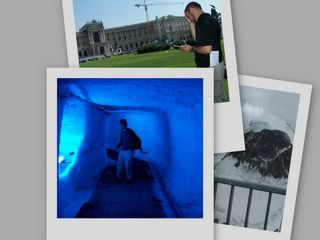
In transition coming back to the U.S. Click the above pictures for a few shots from Europe, many more to come once I get situated back in Fort Collins... Posted by Picasa

Sunday, July 31, 2005

Trecking in the Swiss Alps

I'm currently hiking in the amazing mountains of Switzerland, will be out of contact through August 7th.

Tuesday, July 26, 2005

A Powerful Prayer in a Powerful Place

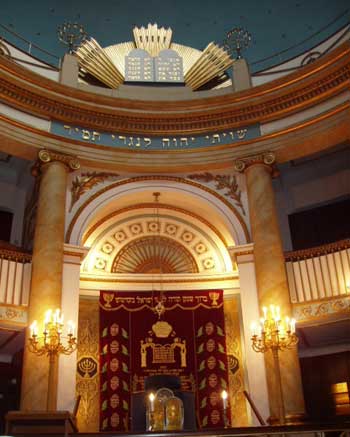
After talking a walk around the coblestone streets of Vienna's Old City around the Danube River, I prayed in the only synagogue that survived the Holocaust in Vienna. Tucked away behind a pedestrian shopping area, the Nazis did not get to it before it was locked up. Entering this Synagogue had higher security then any other syngaogue I have been to; a passport was required to enter, followed by a short verbal background check before being allowed to pass through a metal detector and a secure door. Aunt Cheryl and I were in awe to be standing in a place where just over 1\2 century ago, it was illegal to be Jewish.


This synagogue survived World War II because it was owned by a non-Jew, and it's apartment building apperance hides the magnificant praying space inside. (Click on the title of this blog: ''A Powerful Prayzer...'' to view the inside of this synagogue).

After praying, we had dinner at the kosher resturaunt just next door to the Synagogue. As we were walking out of the resturant, Aunt Cheryl remembered that we had not said Birkat Hamazon (after meal ''thank-you'' prayer). We stopped, and sat down on a step just between the resturaunt and the synagogue to recite the blessings as locals and tourists walked by to the neighborhood pub.

What an incredible privilage and sensation that was! To be reciting a Jewish prayer on an Austrian street in public. When just 60 years prior, we would have been imprisoned, shot, or sent to a concentration\death camp for doing such a thing. What an incredible place to be demonstrating our appreciation for our food, good fortune, and happiness to be alive.

HISTORY
www.jewishvirtuallibrary.org

In March 1938, Austria was annexed by Nazi Germany, the Anschluss. Following the annexation, Jews were chased through the streets, were forced to scrub the sidewalks and Jewish stores and apartments were pillaged. The Social Democratic party was crushed and thousands of Austrians who opposed Nazi rule were deported to concentration camps and murdered.
The Nazis enacted the
Nuremberg Racial Laws in occupied Austria in May 1938. Within a short period, Jews had lost nearly all of their civil liberties, they were unable to attend university, were excluded from most professions and were forced to wear a yellow badge. All Jewish organizations and institutions were shut down. The Nazis encouraged emigration and nearly 130,000 Jews left Austria, including 30,000 who went to the United States.
Many Jewish stores, factories and building were destroyed during
Kristallnacht on November 9-10, 1938. Public displays of hatred commenced across the city and all of the city’s synagogues were ravaged. The only synagogue that remained untouched was the central synagogue, hidden because of residential surroundings. That night about 6,000 Jews were apprehended and sent to Dachau.
The situation further deteriorated after the
Wanassee Conference in January 1942. The remaining Austrian Jews were killed or sent to concentration camps; more than 65,000 Viennese Jews were deported to concentration camps, only 2,000 survived. About 800 Jews who managed to hide survived the war.

Today, Vienna has 15 synagogues, but the only surviving synagogue from the pre-war era is the Vienna Synagogue (Stadtempel), which houses the community offices and chief rabbinate. The synagogue was damaged during the war and reopened in 1963 after extensive renovations. The synagogue has limited visiting hours and heavy security (due to a 1982 terrorist attack). The spectacular round sanctuary has the look and feel of a Reform temple, but it is an Orthodox congregation with a separate gallery for women. Long discussions were held over whether to permit an organ and adopt more elements of Reform Judaism, but, ultimately, the decision was to stick with orthodoxy but to have some modern touches; for example, the bimah was placed in front of the ark instead of the middle of the sanctuary.
Besides for the Stadtemple, there are a number of prayer rooms serving various
Hassidic sects and other congregations. Efforts made by the Lubavitch movement have increased synagogue attendance, especially of Georgian and Bokharan Jews, who have since opened their own synagogue. In 1984, the Zwi-Peretz Chajes-shule was reopened and, in 1986, the Lauder Foundation established the Beth Chabad Shules and other educational institutions. While only ten percent of the Jewish community is actively Orthodox, there are no Conservative, Reform or Reconstructionist synagogues.

Sunday, July 24, 2005

"The Jew Mac"


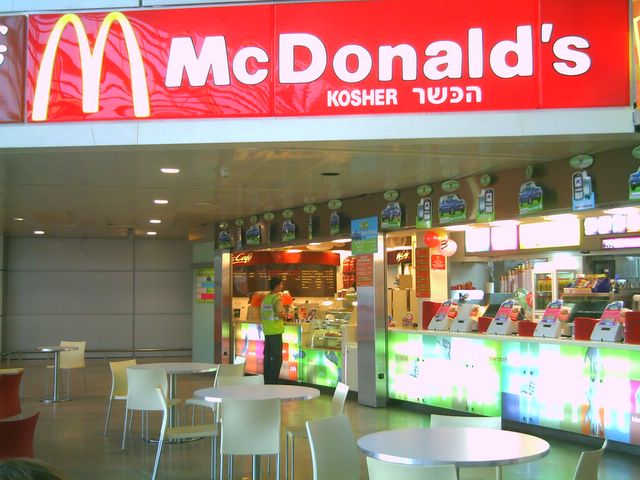
Waiting for my flight to Austria, I stopped for a bite to eat at the KOSHER McDonalds at the new Israeli airport. The food is pretty much the same as every other McDonalds, except there's no dairy (cheese, yogart, etc.) served, and you can actually be 100% sure (guarenteed by Rabbinical supervision) that you're really eating 100% beef (that is also Kosher).

Monday, July 18, 2005

LeChaim

I had just finished a class at Yeshiva (Jewish learning center) looking into the deeper meaning of the Shema (A Jewish Prayer), when 2 guys were discussing what they might do over the next few hours we had before dinner. I casually suggested that I was going to visit Yaakov (Jacob), a friend who is very ill and was staying in a nearby hospital, and the others were eager to accompany me. So, two yeshiva guys and Raphael (my violin) joined me for the journey to visit my sick friend.

When we arrived at the hospital we sang and danced for some time, and recited the Me-sheh-bay-rach (Prayer of Healing for the sick), then made our way back to the Old City.

When I reached Zion Gate, I made my way directly to the Western Wall to say a prayer for Yaakov. Raphael came along too, and we played a somber melody called Oseh Shalom. At the end of this tune, a woman approached me and began speaking to me in Hebrew. I didn't understand most of what she had said, but I did get the basic idea that she wanted me to play violin for school children at some event. So I went.

I followed the woman and her 3 children into their car, and we set out on the roads of the winding hills of Jerusalem. On the way, I leraned that today was the 12th day of the month of Tamuz on the Hebrew calendar. The woman explained that the 12th of Tamuz (This year, July 18/19) is a day revered by some as a day of celebration. A day of recollection to the freedom of a Chabbad (Branch of Hassidic Judaism - pronounced "Hah-ba-d") Rebbe (The head-Rabbi of the time) from a Russian prison.

We arrived at our destination, and I found myself in a Chabbad house (synagogue / place of meeting) of one of the neighboring areas of Jerusalem where most people at the event spoke only Hebrew. The first person that I had a conversation with in English hapened to have a direct connection with Yaakov.

We said a Lechaim (raising our glasses in toast, usually with alcohol - literally meaning "To Life!") and Refuah Shlema (complete healing) for Yaakov on the anniversay of the Rebbe's release from prison.

Sunday, July 10, 2005

Kiddush at the Kotel

Friday Night. A night to celebrate.

The sun has set and the week at its end.
We prayed, we ate, and we sang about the land.

After our meal, the guys @ AISH have a tradition:
Offer soldiers on duty a glass of Kiddushim.

(Kiddush is drinking a ceremonial glass of wine. In the soldiers case, grape juice)

We grabbed some cake and a bottle of Holy juice,
and walked down the steps letting our vocal cords loose.

Towards the Wall of Wailing Wonders we marched along,
Searching for soldiers as we sang our happy song.

We approached the first two soldiers with delight and gratitude,
We approached each soldier, even the one in a grumpy mood.

Some accepted with a smile, and others asked us to leave!
But we acheived our goal in offering a good deed.

Whether reluctant or grateful each soldier was that night,
Our thoughts and good wishes helped spread light.

Thursday, July 07, 2005

Packed @ Wall

Tonight, I'm visiting friends living in Har Adar, located on the border of the West Bank. Life here is "relativly peaceful" compared to what's happened in London today.

I'll be back in the Old City of Jerusalem again for the weekend. Friday nights at the Western Wall are packed with people, it'll be a great experience.

Soldier Meals

Not only are there student discounts, but if you're a soldier in the Israeli army, there's a special discount for a "soldier meal."

Sunday, July 03, 2005

Kiryat Sefer

In English, Kiryat Sefer translates as: "The Neighborhood of the Book"

A dozen of the guys from the school I'm studing at, Aish Ha'Torah, took a bus to Kiryat Sefer this past weekend. This Shabbat (Saturday) I spent in the fully integrated Torah observant community of Kiryat Sefer. The culture immersion in this place can be compared to my experience 5 years ago when I spent Shabbat in the ultra-orthodox community of Meha'Sharim (Translation: "Hundreds of Gates") in Jersusalem with Rabbi Goldstein.

The difference between the cultures of Kiryat Sefer and Meha'Sharim is radiated by the land in which we ate, slept, and prayed on from Sunset Friday night to Sunset Saturday evening.

The synagogue we had the privilage of davening (praying) in had an Ark (in which the Torah scrolls are kept) that was carved by one of the world's best wood sculptures. I'm still struggling to understand some of our daily prayers, but everyday in classes I learn more about the meanings of each prayer, paragraph, sentance, and word that we repeat everyday.

The land has an amazing panoramic view of the majority of the Israel from its hilltop (in which Tel Aviv and even Ashdod can be seen on a clear day). The Arabs occupy the land just across the valley next to the Green Line from Kiryat Sefer. (The political Green Line signifies the border of Israel and Jordan prior 1967 and it got its name from the miles of evergreen trees that literly create a green line)

When constructing the city, bulldozers ran into ancient ruins of a civilization dating back thousands of years, where I got to stand in one of the oldest remains of the earliest synagogue excavated in Israel.

The land of Kiryat Sefer has a history that dates back to the Macabean Time, when the Greeks ruled the land which we know now as The State of Israel. The battles of the Hanukkah story occured in the hills surronding the Neighborhood of the Book which lies in the center of the Holy Land.

2500 years ago, Jews lived and studied about Torah (life) in this land, and 2500 years later, 80% of the men living in Kiryat Sefer learn and pray full-time today. They afford this lifestyle by limiting the luxeries most of us are used to in our everyday lives. Out of the 30,000 people that live there, not one owns a television, and many do not own cars. There is no movie theater or even a police station - the town has no need for either. A free loan and return system, called a Gamacht, is setup to borrow everything from chairs for a special occasion to power tools which the community shares.

Every Shabbat, all the road in the town are closed to motorized vehicles, and kids can play in the streets freely. Many of the worlds best Torah scholars reside in this area, including the Chofetz Chiam's grandson. (The Chofetz Chiam is one of the righteous men of modern time, who lived only a century ago).

Our group was paired off, and taken in by several families. Each family rearranging their homes to accomodate us as their Shabbis* weekend guests.

* Shabbis is a term used by Ashkinazik (Jews of European decent). Shabbat is a term used by Sefardic (Jews of Spain or Eastern countries decent).

On Shabbat, the traditional Orthodox "Jewish uniform" is a black suit, white shirt, tie, and black hat. On Friday night, I wore white pants and a white shirt that I brought from India. Topped off with a traditional black vest, and colorful Uzbekistanian-style Kippah. Now, keep in mind that the guys on our trip that wore the traidtional Orthodox Jewish uniform received many looks from curious children who were not used to seeing so many visitors from the outside world. When the kids saw me, instead of asking me "Where are you from?" They would innocently ask me, "What äre you?"

Other kids would stare at us, and as we passed by, would chatter with eachother about the special visitors coming to spend time eating and being with them. One child whispered to his friend, "Why doesn't he [me] have Tzi-Tzis?" A question I find myself unable to answer right now. (Tzi-tzis are the strings that are required for a Jew to wear on a 4 corner garment. The Tzi-tzis carry a powerful meaning by being a constant reminder to the wearer to remember the 613 good-deeds that the Jewish people are required to practice).

My time in Kiryat Sefer was relaxing and educational, and has furthered my connection to a land which I'm growing fonder of every day while I'm here.

Sunday, June 26, 2005

Weekend Highlights

* Experiencing Kabalat Shabbat (Friday night services) at Rabbi Friedman's Chassdic Synagogue (Rabbi Twerski's brother-in-law)
* Playing my violin at an impromptu concert on Saturday night in Jerusalem's Old City Town Square with 2 guitars, a drummer, harmonica player, flutist, and dozens of people dancing to the music.
* Having lunch with the Waldinger's at their home near the Kotel (Western Wall)
* Walking through the mysterious lights of the Old City Market at night
* Meeting other peers that are searching and yearning for a deeper understanding of what our Jewish heritage is all 'bout.

Be & Do

A Rabbi here asked me if the people in India are much calmer than those bustling through the streest of Jerusalem or New York City. My answer surprised myself.

Even though the city of Mumbai is overstressed and past capacity with too many people to manage and provide for, the daily lives of those Indians that I met had a peaceful sense about them. I guess it's best explained that the Indian sense of BEING has a calm attitude, even though the daily life can seem so intense and under pressure. Though getting on to a train can be a mob seen, and waiting in long lines and pushing through crowded streets is common - the important thing to remember is it's how you are BEING not always DOING that counts.

Wednesday, June 22, 2005

Jerusalem

I'm in Jerusalem. Traveled by train from the airport. Though it was a longer journey than going direct by bus or taxi, I always think it's fun to travel by train.

The remodeled Ben Gurion Airport is incredibly nicer than it used to be! I've checked in to my residents at AISH Ha'Torah, and I'll be learning and living across from The Western Wall (Kotel) for the next month.

Though coming from India to Israel has made the Israelis abrupt demenor stick out, there's a feeling I get here that would never happen anywhere else. Probably most obviously distinguishable as a connection to my own heritage, traditions, and roots. I can't put my finger on it right now, but I will hopefully be able to better describe it as the next month goes by...

I've been to Israel twice before, but this is the first time I've felt a comfortable sense of familiarity of my surrondings in Jerusalem; from the surface level recognition of modern culture to the deep sense of spirituality that's hidden inside the walls. Walking in the Old City at night is quite and nice, and I'm sure I'll be hangin' out by the Rachov (Center of the Judaic Quarter) playing some fiddle and enjoying the town. Lilah Tov ~~ Good night.

Wednesday, June 15, 2005


LOOK! It's me at sunrise in the village of Belgaon Dhaga... I've finally figured out how to upload photos with the software "Hello!" and Picasa. I will start from the beginning of my trip and work my way forwards. If you don't feel like browsing through the journal for pictures - you can see most of them directly at: yoshiphotos.blogspot.com Posted by Hello

Friday, June 10, 2005

Updates Coming Soon...

Future blog updates will include:

* Encounter with a family in the Chicago Airport
* Chaos: It's all Realative
* Being Jewish: It's all Realative
* Ordering Fast Food
* Reservation Madness
* Appreciation and understanding

Tuesday, May 31, 2005

Kam Ta

On the flight from Korea to Los Angeles, I sat next to an elderly Korean couple. I found myself accidentally trying to communicate in Hindi.

I didn't even land in the United States before I noticed myself meaningfully (from my perspective) but aimlessly (from others perception) trying to communicate with the "Indian Wobble" - a gesture that means, yes and no. A gesture that requires one to pay extra attention to detail, expression, and intensions of others. A gesture that is a natural part of communicating in India. A gesture that I already begin to miss, as my wobble doesn't carry to same meaning as it once did during my time in The Bharat ("The Land: India").

Many people go to India to find "enlightenment" - to find "themselves." I had the same ambiguous and lofty ideas in mind, but discovered that what I was searching for I already had inside of me. I am the same person now, but with more direction, more confidence - and more internal drive.

Thank you in Korean: Kam-ta-hum-de-ya!

Jet Lag

muscles so soar... the "jet-lag" is hitting me hard! Been wide awake for a few hours, then barely able to move, and sleeping for 10 hours - then up for another few... my body still wants to be in India.

It was neat crossing the international dateline at sunrise this weekend. The Pacific Ocean was outlined by a thin crest of gold and red sunlight, just as the Movie "National Treasure" rolled it's credits on our 737 Korean Airline Jet. A fun adventure flick, that's about finding a treasure hidden in the U.S. - as I thought about all the treasures I carried in my mind about India.

Sunday, May 29, 2005

Am I Dreaming?

On a short transfer-stop in-between my flight from Mumbai to Los Angeles in the airport in Seoul, South Korea. I was just in India for 4 months... it now almost feels like a very realistic dream - because in a way - it was.

A dream that has empowered me to have the ability to bridge international realities.

On my way back to the U.S. I am gearing up to experience "American Culture Shock." I think the most important thing for me to keep in mind, is that I am in a unique position to represent India to my friends and collegues in the States.

Wednesday, May 25, 2005

Departing India

My travels in India are quickly coming to a close... I'm jumping on a plane destined for Los Angeles on May 29th, will be in Cali for Memorial Day Weekend before returning for a short visit in Colorado to be soon followed by time in Israel!

So... my BlogUpdates will still be coming! Have so much to add and reflect on from my trip. Will be so interesting to experience "American Culture Shock" returning from the vibrant and intense life of Mumbai! ~ Cheers ~ Namaste ~ Shalom ~ Namaskar ~ Peace

Sunday, May 15, 2005

Rural India

Currently, I am living on a farm in rural India. I am on assignment working on an independent study course through Colorado State University. My project is organized through a company in Fort Collins called Ecselance International. A micro-financing organization that provides funds to people who otherwise are too poor to be credit worthy to receive funds from any other source. The villagers dedication and commitment to better their lives through the small loans they receive is amazingly inspirational.

Water is Precious

I have gained a new appreciation for what a short water supply really means. Each day, water is pumped from a bowl well into a storage tank that disributes the potable water to the house. Somedays, only a few liters of water can be collected and pulled from the well. As the monsoon does not arrive for another month, we're in the heat of dry season at present. Which means, I have the opportunity to experience bucket baths, and true water conservation. For example, leaving the water running while brushing your teeth, would directly impact how much water we had left to drink for the following week.

Sunday, April 10, 2005

The Village Entrepreneur

Accompanied with a dedicated work ethic and strong family values, the village entrepreneur is a pure example of what it really takes to survive. Unadultered by the flashing lights and glitter of a big city, a village entrepreneur can focus on the essential needs of developing his community. Committed and focused towards bettering the lives of his family and neighbors.

The Village of Hope

In October of 2004, Jim Epstein of Escelance International (www.ecselance.org) got word from CSU Professor Paul Hudnut, that I would be traveling to India. It was then, that I made the first connection to being part of experiencing the fruitful seeds of hope that were being planted in Belgaon Dhaga: The Village of Hope.

Belgaon Dhaga. Nestled away several kilometers from the town of Nasik, a swirling spirit of hope begins to stir in the wind. Lead by 5 hallmark projects that are the heart and soul of the proven success of hard work and dedicated leadership.

And now, I aim to assist with the further growth of the village entrepreneruship ventures with the help of:
Jim Epstein: The funds provider for the village vision.
Paul Hudnut: My CSU internship coordinator
Vinod and Kamala: Core motivators/educators of the village of hope.
Chandu, Vishnu, and Ashok: 3 of the growing number of entrepreneurs that compose the heart and soul of the projects.
Aanand Manhendroo: Successful dream builder and film producer.
Rutul Naik: A friend and aspiring film student.

More to come soon...
belgaondhagaproject.blogspot.com

Saturday, April 09, 2005

Visiting Belgaon Dhaga

After two one-day visits to the village of Belgaon Dhaga (BD), I am gaining a clearer picture of my involvement with the village.

My first visit to BD was last weekend. I went alone by bus to meet Vinod in Nasik. The actual time on the road is 3-4 hours. We then drove together to BD, and I had a wonderful evening with Vinod and Kamala. They know one another so well, that every once in a while, they would finish their partners sentance or thought. Kamala's food was extra tasty, and Vinod's insight was extra stimulating.

My intial interaction with the villagers was one of the most rewarding experiences in my life.

After an intial meeting with Vinod, Chandu, Ashok, and Vishnu in Chandu's home, Chandu showed me his irrigation pond, and explained the precise math of the business model of his pond (how much water each crop needed, how much water the pond holds, etc).

Vishnu showed me his 17 water buffalo dairy farm, and explained the process of extracting methane from his water buffalo's waste. It was also exciting to find out that he plans to expand his business and share his bio-gas with his neighbors.

We sat down to chat in Vishnu's home, and the villagers had the opportunity to ask what I was doing visiting their village. Vinod explained I was here from Escelance International, and I added that it was an experience I never had the opportunity to be part of before. Then, I got to drink a fresh glass of milk that was cooked using bio-gas from the same buffalo!

Then, when the electricity came on in the village (It's out for 6 scheduled hours during the day - everyday), I got to see the basic program skills that Ashok was teaching at the second branch of his computer training business. He has a total of 30 young students, and plans to soon expand to a third branch.

Rather than translating Marahti and English when I interacted with the villagers, Vinod emphasized their need to practice English when talking with me, as well as my need to speak slowly and simple sentances when talking with them. He reminded each entrepreneur that it was important to share their full knowledge of each of their projects, in as much detail as possible.

This inital interaction with the villagers demonstrated how capable each of us were in our ability to communicate with one another - and with each visit, our communication will grow.

After the village visit, we stopped in the nearby town of Nasik to attend an Entreprenuership Workshop orgainzed by a spritly group of business men and woman and hosted in Mr. Bagwe's company training hall. (Mr. Bagwe is also a member of the village adivisory board). It was refreshing to see a group of entrepreneurs get together to developed and improve successful communication skills.

There are 2 key people that will be assisting me with the further development to basically "Market the village." One, is Rutul Naik. Rutul is my selected counterpart for the 2 week experience in the village. 19 years old, energetic, passionate, and excited about participating in this project, Rutul has grown to be my best friend in India. Rutul is a 1st year Mass Media student at a college in Mumbai. He is the son of Shaila Naik. Shaila is the principal of Lord's College in Mumbai, and one of the lead facilitators and driving force behind entrepreneurial education in India. Shaila has a tentative meeting with the President of India next month to share her enterpreneurial school cirriculm.

The second key person, is my newly found mentor and guiding light: Aanand Mahendroo. Aanand is a successful film producer that I met through a mutual friend at a Entertainment Industry Convention called FRAMES, that was held here in Mumbai last week. Aanand has an itching spark to help see others succeed. We visited the village school, and several young kids performed a few skits that they had learned in school. It was quite impressive to see the dynamic and commitment of the educators and students at the school. Aanand recognized that the village kids did not have the proper facilities to "excersize their playful minds," and has already made plans to improve the village school through facilitating the creation of a "Youth Center" at the school. As the best way to focus on the sustainability of any community project, is to start with teaching/nurturing the younger generation. Over the course of many years, Aanand has guided a countless number of young men my age to better their lives and achieve their goals. He also has 11 schools in India that educates urban and rural kids together. Enabling the farm kids and city kids to interact with eachother and learn from one another.

It was very rewarding to see Aanand's interaction with the villagers yesturday. As he spoke with them in their native tounge, their minds were put at ease, and the same interaction (questions and explanations of their businesses) that I had with them the week before, was much easier for the villagers to put expression and feeling into explaining their projects. It was wonderful to see that spark in their eyes. And, as I had heard the explanations in English just one week prior, I had the added benefit to see their expressions and passion about their projects this week as they explained them in Marahti.

We all agreed that it was vital to get the village teenagers involved with the projects or at least more active in their own community. Otherwise, the young adults will leave the village for the false perception of better oportunity in the city.

There was also a surprise visit by Vibha Patil. A woman who many describe as "a wonderful bundle of energy." I have been told that her passion and expertise are one of the main ingredients to the success of the GSBG (funding board). Even so, all her input as a lead member of the advisor board who managed a matching grant for 50 toilets (9 of which went to the local school) is topped off with a humble presance and warm smile.

Aanand also pointed out that there was not one pair of sad eyes in the village. That was an incredible observation, and rightfully gives Belgaon Dhaga the name "Village of Hope."

Entrepreneurial Spirit

The past week has launched my world view into a whole new dimension. Traveling into the small rural village of Belgaon Dhaga has transformed my understanding of what it truely means to be an entrepreneur.

A very tough question in itself: "What is an entrepreneur?"
Your textbook answer may be:
- Someone who is willing to take risks in a new business venture.
- An innovator that will take advantage of a profitable opportunity.
- Someone who is willing to do what others don't.
Though these are all commendable goals, none define the true nature of what the ambigous french term really means. A nature that alluded me until now. A nature that exists in the hearts of the entrepreneurs of Belgaon Dhaga.

Saturday, March 26, 2005

Purim

I celebrated Purim and heard the Megillah at the Chabbad house in Mumbai. A speedy Megillah reading, was followed by a magician that played with fire, noshes and homentashin, a Fiddler on the Roof (me!), and a raffle.

There were almost 50 people there by dinner time. I won a picture frame in the raffle. Hmm.. it will be hard to choose one of the hundreds of pictures that I've taken here so far! I hope to upload more pictures for everyone to see soon, on my website: www.yoshistyle.com

Wednesday, March 23, 2005

The Human Machine

I heard what sounded like a small army responding to a drill sergant in unison...

"Hiya," one voice rang. "HO!" Dozens responded.
"Hiye!" one voice rang. "Heya! They responded.

...to actually find 37 men all tugging on a taut rope that wrapped around large cable lines the dozens of men were heaving into the ground.

The lack of machinery is made up by sheer man power.

Quick India Jew Facts

Did you know: There's a bit more than 5,000 Jews living in India?

* Around 3,500 of those Yehudim are residing in Mumbai (once known as Bombay)
* There are 10 Synagogues in Mumbai (3-4 are still highly active)
* This year, 10,000 Shmur Matzot were baked and distributed to the local Bene-Israel (Indian) Jews.
* The Bene-Israel Indian Jews have been in India since before the 2nd Temple was destroyed. Their common language is Mahrati.
* The JCC in Mumbai teaches Hebrew classes weekly.
* Chabbad is active in Mumbai (and provides free kosher meals for travelers every night) - yes, KOSHER chicken in INDIA!
* GOA, a small tourist hot spot on the West Coast of India, is notorious for Israeli vacationers just getting out of the army. There's even a few towns where you can communicate more easily with others in Hebrew, rather than English or Hindi.
* India has 12 official languages, English not being one of them. Though most locals in North India speak Hindi, English is often used as the common language.
* India has the 3rd largest English speaking population in the world at around 150,000,000 people (which is about 10% of their population, or HALF the United States).
* South Indians don't speak Hindi, so North Indians are considered foreigners in South India.

Sleeping Amenities

1 AM at the Downtown Train station:

I traveled on the last train into Churchgate (downtown) station last night. As I exited the train, several guards boarded to make sure there was no one trying to spend the night on the train.

One ragged man who was lying in one train car, was poked with a stick and scurred off like a dog, and chased out of the station.

I continued walking down the landing to find about 20 men in train-uniforms all sleeping on the floor by the ticket booth. I'm guessing these men would be driving trains first thing in the morning and the floor of the ticket booth is the train employees "overnight amenities."

Heading towards my destination, I had to climb over another 50 or so women and men sleeping in front of the train station enterance.

Tuesday, March 22, 2005

Blink of an Eye

Walking down the street past sunset. Smelling the aroma of Indian spices and sewage drifting past my nose. The sound of blaring taxi horns, and traffic ward whistles. The sight of hundreds walking through the market collecting their weekly rations.

Splat!

The man in front of me is covered with egg shells and flour that fell from a resturaunt that rest atop a 6 story building standing next to us. After a few brief shouts of disbelief, the man shrugs his shoulders and is on his way. The whole incident lasts no more than several seconds.

If I had been facing the other way, or looking another direction, I may not have seen what happened at all. Don't blink your eye in India - or you may miss out on everything.

Saturday, March 19, 2005

The Essance of Leadership

Over the past month, I have had the opportunity to visit almost a dozen universities in Mumbai. Each one carries a slightly unique creed and approach to groom their students. Some are hands on. Others are by the book. Through my interactions with successful business people and students alike, this blog paraphases one aspect of the values in management leadership:

Management is a fluid artform. An artform whose true integrity is tested at its highest point of vulnerability; sustaining motivation at times of diversity.

Every artform has values. Values which create the structure for a strong foundation.

A leader must find people who are strong enough to build such a foundation. And when the right foundation cannot be built, a leader must foster tolerance for risk and behavior that deviates from their own objectives without loosing focus on the original intended value system.

Progress is about change. Leadership is about creating a worthy dream, then helping others achieve that dream.

Tell Me!

I've never been to England, but here's a few common phrases I've experienced in India so far:

We Say: Indians Say:
No problem = No probs!
What's up? = Tell me!
Let's go = Make a move!
Restroom = Loo / Toliet

I'm not sure what it is about my accent, but it seems that whenever I need to use the toliet the most, they'll never understand what I'm asking for!

Relative Numbers

Last week, I attended a graduation ceremony for KC School of management. The honors students were called up, and the head of the class approached the podium to receive her honorary diploma with the highest marks in the class at 78%. Yes, Seventy Eight Percent!

I was surprised to find out that the grading system is still based out of 100% - but it's on a different scale. Anything above 70% is an extremely high achievement. A great mark would be 65-69%. Passing is 35%. Go figure. I guess the value of numbers change a bit when you travel half way around the world. :)

Thursday, March 17, 2005

In The Breeze

I got to drive a motorcycle for the first time - it was an awesome experience riding a 2-wheeler past palm trees on the open road, passing elephants and villagers as the sun set and sizzled on the Arabian Sea.

Genuine Taj

Top Floor of the Taj Mahal Hotel. Quiet. The rustle of the street dies down outside. It's 1:00 AM as the city begins to sizzle to sleep.

I haven't heard a stillness like this since before arriving in India. It reminds me of the silence of the hall of a University during Spring Break combined with the deeps caverns of Carlsbad, New Mexico. The Taj Hotel has this feeling; a combination of a place of business with the majestic atmosphere of a magical kingdom.

Just outside, stands the Gateway of India. A magnificent structure calling out to the bay of the Arabian Sea. As the sun rises across the Western Globe, the intoxicating vigor of Mumbai lays rest for a few short hours. The sidewalks become sleepwalks. The trains settle in their yards.

Through the thick haze of multiculturalism, my wandering mind can at least take some identity in a sea of yearning struggle. There are so many people. Genuine people. Genuine workers. Genuine businessmen. Genuine healers. Genuine liars. Genuine beggars. Genuine friendships. Genuine meaning. Genuine intentions. Genuine hard workers. Genuine Indians.

Sunday, March 13, 2005

Navel Pizza

I was getting hungry, and stopped in a local food joint in the capital of Goa, and asked,
"Can I have a simple Tomato-pizza?"
"Simple Potatoe. sure. sure."
"No, plain. Plain pizza."
"Ah! Tomato! yes, no probs."

Not worrying about what I actually might get on my pizza for the moment, at sat down and browsed a brochure of the Navel Academy. It was located in Goa.

Curious as to where it was located, I approached the counter and asked the pizza guy, "Do you know where the Navel Academy is?"
"Yes!" He responded enthusiastically. A little surprised, I was hopefully anticipating that it would be close by, however my thoughts were cut short when he continued his response, "Yes! Yes! Your pizza IS ready, sir!"

oy. Tomato-Potato :: Navel Academy-Pizza :: I guess those words sound the same when you don't speak the same language.

Friday, March 11, 2005

GOA

12 hours on a train, and a short van ride to the shoreline property of Calangute; a small town located in Goa. (The Discovery Channel has listed Goa as one of the top 20 romantic destinations in the world).

Even though I will only be here for a few days, I already have a sense of the intoxicating escape the lands of Goa provide as a haven to foreign travelers.

Being out of the city of Mumbai gives a whole new perspective and depth to my impressions of the vast country of India. As elephants trod down the side of the road, the locals and tourists charge the fresh air of Goa with an enticing aroma.

Monday, March 07, 2005

Vegee-Tables

Shiu Sagar Resturaunt

A vegiterian eatery that serves Indian and Mexican food. I was a little afraid to try the Mexican food, just because I wasn't sure what I might really be ordering. Glancing down the Indian menu there was a list of around 30 different items. No shortage of choices, however, high shortage of understanding.
"What's this?" I asked.
"Vegta-bul."
"I see. These 30 items are all vegetables, right."
"Hah. [yes]"
"Which vegetable is this?"
"It's a vegee-ta-bul."
"I see. Which one."
"Which what?"
"Which vegetable?"
"Hah."
"What hah?"
"Which veg-tabul wood you lick?"
"This one."

Saturday, February 26, 2005

Food International

Chinese Food

The Chinese Food in India is some of the best I've ever had. I might be biased, because eating foreign food here is a nice change. Don't get me wrong - the Indian food is spicy and tasty - but a bite of Chinese is always nice.

Also, I would compare the availabity of beef in India, to the availability of Duck or Elk in resturaunts in the U.S. Besides the fact that a large majority of resturaunts do not serve meat at all.

McDonalds Abroad

In Israel, the price structure and quantity of a McDonalds value meal is about the same as the United States. And I believe it's even a little more expensive in Japan.

The local McDonalds here in Mumbai, India has 6 value menu options. 3 varities of chicken, 2 veggie, and one Mexican wrap. The counters are the same, the atmosphere is the same, the cooking facilities and machinery is the same. The McChicken tastes the same. The veggie options are of course unique, and taste Indian.

The price is different. The largest size you can get here, is the medium size you can get in America. Though the pricing structure is different, you can get almost twice the amount of food for the same price in India. (You will pay less than $3 for the largest size value meal). An ice cream cone costs about 25 cents.

Also, they've done something here that I haven't seen at any other McDonalds (or any fast-food resturaunt for that matter) that I've visited. As you are waiting in line, they have an employee write down your order on a form, then you are handed the form, so that order goes more quickly when you're at the counter.

The Loo

The particular McDonalds resturaunt I visited also had a common sink area, with a uni-sex toliet. Nicer resturaunts have air-dryers (not paper towels), as paper goods (toliet paper, paper towels, napkins) are not common in this culture. Though, napkins are more common than paper towels and toliet paper.

And I'm sure you might be wondering by now about my experience in a public restroom. Well, I haven't been brave enough to try one yet. It was a surprise to me to find that the schools (both college and elementary schools) do not have toliet paper either. Instead there are toliet bowls built into the ground, and either a hose or a bucket for sanitary purposes. The nicer resturaunts and hotels have "sittable-toliets" and toliet-paper.

5 Fingers

India is like a hand with 5 fingers. Each limb extended in a different direction. Independently moving from one other, yet joined together to form one cohesive unit. The biggest barrier is learning how to manage those fingers. After being here one month, it seems the biggest area for improvment within the Indian culture is a stable infrastructure and managment system.

The potential of the people here is quite astonishing. 2 weeks ago, our team observed a Social Impact Awards Event at one of the local colleges. One of the winners at the event was starting a company that would employee woman in poverty called "rag-pickers." Without being employed, these woman would cyphin through garbage, searching for plastic bags that others have thrown away. Similar to those homeless in the United States that would rumage through garbage looking for recyclable aluminum cans. Just as collecting aluminum can turn a small profit in the United States, the rag-pickers here could sell used plastic bags for a few rupees. Organizing these "rag-pickers" is the first step to creating a productive system that improves the living conditions of those employed and provides a valuable service to the community.

If the nerves are connected in the right way, the potential for the hand of India is mind-blowing. The people that I am meeting here: Shaila Naik, Malini, and others that are part of the education enterprise system, are the foundation for transforming the Hand of India.

Singin on the Train

The train pulls in. Men jump off in herds. I follow in line without much effort, as those behind me are eagerly pushing me into the train so they can board before it starts moving again. Cramped inside. The train starts to move.

Bells. Drums. A group of about 8 men start chanting and singing. I later found out that this religious singing is done by a certain caste of Hindus to not only pass the time, but also fill the hour long train rides with music instead of gossip.

Thursday, February 24, 2005

Dahanu

I had an opportunity to visit the quite village of Dahanu; a quaint town that is famous for its Chikoo fruit resting 150 Km North of Mumbai.

Several friendly Somaiya University students accompanied us for the journey to the village. They wanted to show us first hand the children who were gaining from their University/village partnernship.

Even just the ride to Dahanu was a magical experience. Just as we began our 2 hour journey, and passed over the bridge linking the city of Mumbai to the mainland of Maharashta (a state in India) I began to drift off into a colorful dream.

When I awoke, I was quickly escorted out of the car. As I was still acclamating to my new surrondings, I peered around me to find myself in a small village... somewhere.. in India. A village.. in India? No. Am I dreaming? Or did I just wake from a dream?

Clap! Clap! Clap! I was quickly jolted into the reality of my dream with a brisk and uniform welcome from over 200 village students who awaited our arrival in the school's gymnasium. We sat with a panel of faculty at the head of the spacious room that opened freely to the farmlands surronding the school grounds.


 Posted by Hello

The next few hours was a wonderful escape from the fast paced life of the bustling city of Mumbai. As every formal ceremony begans, the ornamental candle is lit (usually in front of a portrait of either Lord Krishna, Shiva, or Ganesha).

After the candle lighting ceremony, the school was led in prayer by 3 girls who were lead in their class. After the pleasure of listening to songs sung in their native tongue (which I believe is Maharati), the school principal guided the students through several inspirational stories to encourage them to do well in their studies. Each story held an underlying theme of determination, perservirance, courage, and a focused mind.

I was amazed to see that over 200 students ranging from age 6 to 14 held their attention better than 50 college students would in the same situation.

After the stories were shared, I was presented with a flower, and candy as a token of appreciation for just being at the school. One of my Indian collegues said it is a tradition to always hold a ceremony with flowers, candy, and prayer.


The decks pictured above are the classrooms for the children attending this school. As this school serves a very large surronding area too vast for daily commute to and from school, children and teachers live at the school. Posted by Hello


MORE PICTURES Posted by Hello

Tuesday, February 22, 2005

The Chicken Farm

This past weekend during my personal time, I visited
a chicken farm on the island of Alibah. A one hour
boat ride from Mumbai, and then a jeep drive to the
chicken farm's location. I got to see the process of
preparing live chickens for human consumption (as well
as fish food, as to not waste any by-products) under
the supervision of the Chabbad Rabbi from Mumbai, Rabbi
Gavriel Holtzberg.
I participated in inspecting each chicken to insure
it did not have broken bones, and therefore deem it
kosher. A kosher chicken must have been fully
healthy while it was alive. Therefore, if a chicken
had a bone that was obviously broken while it was
alive, it could not be kosher. These bones are easily
noticable even after the chicken is not alive anymore.
Other kashrut ("koshering") requirements include a
specific way to cut its throat, salting the chicken,
and other preparation and cleansing details.
I have never witnessed an animal being slaughtered
before. It was a very graphic experience, but very
educational as well. I can now appreciate eating
chicken that much more, by fully seeing the process it
takes to go from the coop to the dinner table.

Thursday, February 17, 2005

Personal Global Impact

The past 2 1/2 weeks have been a swirling combination
of incredible sensations and experiences. Personally,
it's been amazing to watch SIFE grow over the past 4
years, and this global internship program seems like
the beginning of an amazing leap in our organizations
outreach and impact, that I am privileged to be part
of. Here are some thoughts on my experience in India thus far:

CULTURAL EXPERIENCE

1. The Wobble
The ins and outs of Indian mannerisms have been a fun
challenge to adjust to. Our team has coined the
"wobble" as a unique Indian gesture. The Wobble is a
rhythmic shake of the head moving the right ear
towards the right shoulder, and then moving the left
ear towards the left shoulder, back and forth. It's
not a nod, and it's not a shake. It's: "The Wobble."
In general, the wobble always means: Okay ("ach-ey" in
Hindi). Its intensity varies depending on its
implication:

One wobble = sure.
A few wobbles = ok.
many wobbles = of course!

At first, it was a very noticeable culture gab. As
initially the wobble can easily be interpreted as a
head shake meaning "NO." For example, when asking for
a taxi driver if he knew what direction to go, he
would answer "yes" with a wobble.

2. IDENTITY
Everywhere we go, our team is a spectacle. Traveling
alone, not as much (at least for myself). I have been
identified as a Muslim, Iranian, Israeli, and Enrique
Englacious.
A Muslim: because some assume that my Jewish knitted
cap ("Kippah" in Hebrew, "Yarmulke" [pronounced
Ya-mu-kah] in Yiddush) is misinterpreted as a Muslim
cap.
An Iranian: I believe because of my skin color, arm
hair, and facial expressions. This has happened more
often when Indians notice I am reading a book of
Hebrew text, and they don't know it's Hebrew.
Israeli: As many Israelis will vacation in India,
this is the most common identity assumption that
has been made about me.
Enrique Englacious: This only happened once when I
performed violin in front of several dozen high school
students at a cultural night. The music or way I
played must have reminded them of the singer.

3. MUSIC
- The music videos are hilarious! Fun and interesting
to watch at first, but then each song sounded just
like the others with the same theme, same ideas, same
dance styles.
- All the Rickshaw drivers play Hinid-techno music.
- We got to hear one "jazz" band at a nice restaurant,
and this experience made me really appreciate the jazz
we have in America.
- Tablas, Sitars, and Mandolines: We still haven't taken
the opportunity to listen to live Classic Indian Music yet!

4. FOOD
- You ask for mild, you get spicy. At our hotel, to
get non-spicy food you must request "plain" or "bland."
- When the city goes to sleep and cools from the long
day, the street cooks turn up the heat on their
make-shift burners and stoves at small booths by the
train station.
- Dominos tastes like Dominos. However in India, Dominos
marks every pizza box with a sticker that says either
"veggie" or "non-veggie." Also, because seperate ovens
are used to cook vegitarian and meat pizzas, the Dominos
here are almost kosher (except for the cheese - which is
hard sometimes even in America to find kosher).

EDUCATIONAL EXPERIENCES

1. WORK ETHIC
America's traditional full time job was 40 hours a
week in the 1990s (I believe the current full-time job
may be more than that now, but I'm not sure). In
India, I am told that a full work week is 80 hours!

2. NOMADIC LABORERS
Shiyla Naik, our mentor, shared with the term
"Nomadic Laborer" with us, and this gave me a whole
new perspective on overcrowding and poverty in the
city.
Yes, it's true that many that live in rural areas
are highly attracted to the urban lifestyle, flock to
the cities, and then get stuck or frustrated when
their pursuit of opportunity turns into a struggle to
just get by. But others, are villagers looking for
extra work to support their rural families. With no
intention of staying in the city, most of their
paycheck is sent back to their village families.
These nomadic laborers live in whatever shelter is
around, and don't bother to settle down, because they
are just following the construction sites and road
work that pays them more than rural work.

3. EDUCATION
It seems there is a much more visible separation
between the educated and working class here. A direct
example of this was in a train conversation I had with
a working class man and a college student. When I
asked the college student what he does, he answered
with confidence and direction, "I am a scholar of
engineering." When I asked the other man what he
does, his response was, "oh, I am just a worker." I
inquired further, "What kind of work?" He smiled, and
said, "I am just a worker."
(Sidenote: From a marketing perspective, it would be
much more important to advertise with much fewer
words, if any, as a much larger portion of the
population is illiterate).

::yawn:: gotta get some shut-eye, so that's all for now...

Take care,
Yoshi

Monday, February 14, 2005

a crevice on the bridge

On the train at night. Lucky to miss rush hour, and avoid being packed as tight as sardine’s in a sealed, strong smelling, aluminum can. Instead, I’m watching a Hindi DVD on my laptop. Sitting on the cushion seats of “1st class,” enjoying the distinct Hollywood inspired foreign flick.

Leaving the train with a good feeling. Glad to be in India. Glad to be in a position to really make a difference.

Getting off the train. Glad to be heading back to my apartment to finish up some work for tomorrow’s class.

Walking up the station stairwell. Holding my head high, thinking of the best – knowing everything will be alright. Hearing some chanting. Knowing that poverty is a personal struggle and can be overcome with personal conviction, hope, and the help of good people.

Shock. Stumble. Devastation. A man sprawled in the middle of the walkway. One leg missing, the other twisted behind his back. A stump for one arm, as the other twitched. Grasping the coins dropped by his face that lay pressed against the cement.

I walk past this man a few times a week. Most of the time, there are too many people surrounding me to even notice he was there. Like a dented crevice on a bridge. An obstacle to avoid tripping. Not a man, but a suffering animal straining through each thin heart beat.

Feeling depressed. Must move on. Must struggle to block out the images that at one time were only imagined in my mind, and now so real, I can only wish it was fiction again. Must not get stuck at the crevice on a bridge. Must move on to make a difference.

Scurried through the street shops. Bought a bottle of water for 8 rupees (20 cents). Refreshing serenity. Thankfully to have the ability of mobility.

Saturday, February 12, 2005

"In a Pickle"

All I would like is a Dill Pickle. If you walk into a street store and ask for pickles, they will tell you, "of course we have pickles! We have pickled onion, pickled tomatoe, pickeled vadu, pickeled mango..."

"But what about DILL Pickles?"

"Dill? What's that?"

"AMERICAN Pickle??"

"ah! no, no!"

It appears that in India, "pickle" basically is any spice that is pickeled in a jar. All spicy of course. A "United States" pickle is not a common thing...

All I would like is a Dill Pickle. lol.

Thursday, February 10, 2005

Curfew

Business hours are taken seriously here in Anderi East, Mumbai. It's almost midnight, and the cops are in the neighborhood this evening, patrolling the area to be sure business are closed before the Midnight curfew.

Wednesday, February 09, 2005

Project(s) Outline

2-3 days each week I will be working with Mrs Shaila Naik, one of the leaders in entrepreneurship education in India. She has developing a curriculum for enterprise education for STD 5th & 6th.’(grades 5 and 6). I will be part of a team trained to deliver these entrepreneurship training/activities to young students in various schools in Mumbai.

The other days in the week, I will be serving as a SIFE program coordinator working under the direction of the SIFE India Country Director. New SIFE Teams are being recruited and I will provide services similar to those being provided by the SIFE Program Directors in the USA, in terms of helping these Teams better understand SIFE, develop project ideas, prepare for competition, etc.

I will be active (sharing ideas, asking questions, deliberate points) to participants in 4 cultural forums and 4 business forums. The cultural forums will be held at different SIFE institutions and focus on various aspects of the Indian and US culture, with additional emphasis on the Indian culture. The business forums will be held at various companies (or meeting facility) and will include business leaders from India. Each forum will address one of the SIFE pillars (ethics, market economics, etc) and a business exec will make the presentation. These presentations will be followed by open discussion.

I will participate in a few SIFE Team projects, 1 of which may be out of Mumbai. This will be an opportunity for me to observe the SIFE India Team(s) in action and to participate in the project delivery.

I will also participate in various social activities and tourism activities, including a visit to Lonavala and Matheran parks as well as welcome and good-bye receptions.

I will work in a Team with the other Global Interns (those going to Malaysia, and the Asians coming to the USA) to develop a Global Internship Handbook. The final product will be printed and distributed extensively around the world. This document will record my internship experiences and highlights that myself and the other participants have experienced.

I will be part of the organizing team and also lead a forum on this Internship during the SIFE World Cup in October (in Toronto). This forum will include all the US interns as well as students from around the world attending the World Cup. The format and agenda for this forum will be partly decided by myself and the other interns.

The Luxeries of Life

Things which you may not realize how nice they are to have until they’re gone…
- Potable (drinkable) Tap Water
- Reliable electricity
- Eating fruit without worrying about Hepatitis E outbreaks
- Not worrying about hosting Malaria after getting bit by a mosquito
- Running hot water
- Showering and brushing your teeth with potable water
- Traffic lights and road signs
- People that speak the same language you do

Sunday, February 06, 2005

Rickshaws & Trains

My first time traveling into the city; an experience; at least an hour transit from our residence to Central Mumbai (20 minute Taxi ride > 45 minute Train ride > 10-30 minute Taxi/walk). I was hoping to make it to the Chabbad House (Jewish outreach group with locations all around the world) located downtown, before Shabbat (The Jewish Day of Rest. Begins every week at sunset Friday night, and continues through sunset Saturday evening). The taxi ride to the train station was even more thrilling than our first cab ride from the airport! With dozens of horns honking, pedestrians walking freely between traffic, no lanes, and no rules (at least in Mumbai)-- this experience definitely gets one’s adrenalin flowin’
Tanya was just as excited to experience a cab ride, so she tagged along for just the first stretch of my journey, from the hotel to the train station, and then would head back to our residence. The taxi cab we rode in is called a “Rickshaw.” Unlike a 4-door normal taxi cab, Rickshaw’s are mini-autos with a fabric top and no doors. From the back, they look like horse carriages. The front seat is for the driver, who has a motorcycle style steering wheel. The back seat fits 3 average Americans comfortably or a whole family of Indians. It is unbelievable how many small corners the Rickshaw fits through. When traffic flows no faster than 30 kph (kilometers-per-hour), I didn’t feel that unsafe.
We arrived at the train station. We tried explaining to the cab driver that he should drive Tonia back to the residence; however, he did not understand us. A man approached the cab to help. He spoke little English, but not enough to really help us communicate with the driver.
Another man approached our Rickshaw.
Three more men surrounded the taxi.
All of them just curious to see what was going on. Though we were only asking for directions, we were a spectacle and unfamiliar presence to those around us.
Finally, a woman emerged from the crowd who spoke English. She translated our question to the driver, and then she was kind enough to escort me all the way to the train ticketing booth and gave me directions on which platform to take, and how to identify my train. Our supervisor wasn’t kidding when he said, “if you ask for help, they will either say ‘I’m sorry, I’m too busy;’ or, they will personally make sure that you get to where you need to go.” I bought my ticket and headed for the train platform.
As the train approached, men began jumping off the train and onto the platform while it was still going 10 kph! Other men would rush on board even before the train stopped (I’m guessing they were trying to find an empty seat on the full train). They acted like salmon fighting an upstream current. Some of them jumped out at me, bounced off my body, and were repelled back to the platform. As the fish (men) were prodding against the cattle car (train).
I saw there was a fairly empty cabin, and naturally, walked on board where I didn’t have to fight to stay on the train. Two other men also boarded the car I was on, and began mumbling at me and waving their arms. I tried asking them if I had gotten on the train headed towards town, and they just continued to mumble and wave their arms at me. Not until a few minutes later, did I realize that they were both deaf. I find it kind of ironic that without knowing it, I found myself riding on the “Handicap cabin” on my first trip into downtown Mumbai; quite ironic.

Tasty Bites

Trying out the poultry at the hotel, and so far so good. Didn’t know if I didn’t want spicy food I had to ask for “bland.” I just asked for the “mild” spicy Garlic & Sauce Chicken… HOOOOOT!! Wow, I can’t imagine what “spicy” might really mean here.
At our residence, for 80 Rupees ($2) you can get a descent portion meal (usually with a wide variety of sauces to add to your dish) which includes at-your-door service. Despite the notion that Indian portions are much smaller, you do get a lot of food for the amount you pay. (Sidenote: As it is disrespectful to not finish what is served to you, most of what others cannot eat, I will finish. I've been nicknamed the groups "Human garbage disposal." I see it as a great opportunity for me to try more flavors of Indian curry). My favorite so far is the spicy garlic sauce chicken with a side of Indian bread called Rita, and stuffed potatoes dipped in date sauce.
So far, no incidents of getting sick from the foods. Only an adjustment to all the new flavors. (Papaya pills help immensly with digestion). There's a type of "spicy" here that I can't quite describe: It's not "hot" spicy. It's not "steamy" spicy.. but more of a "sharp" spicy. In any case, it's all tasty.

Friday, January 28, 2005

Arriving in India

CLICK HERE FOR MORE PICTURES FROM THE WELCOME PARTY

It all felt like my previous internationl flight (December 2003) to Ben Gurion International Airport outside of Jerusalem. Not having any real comprehension of what day it was, the first greeting I received from an Indian at the airport was, "Shabbat Shalom!" (Have a good Sabbath: a holiday that starts every Friday evening after sunset and continues through Saturday until sunset). He wasn't Jewish, but he noticed my kippah (Jewish Cap). I thought that was pretty neat.

The five minute taxi cab ride from Mumbai’s international airport to the apartment/hotel that we are living in was exhilarating. All the cars here are relatively smaller than American cars. With most of our luggage strapped to the top of the taxi, we swerved around pot holes and tight corners, and through intersection without traffic signals leading us towards our residents where we would be residing for the next 3 months.

Streets are rarely marked, and forget the idea of "road construction signs," because almost all the roads are "under construction." 10 centimeter drop offs, large sink holes, and large debris make for a very bumpy ride (no need for Disneyland here, just jump in an auto!). Did I mention there's no lines to divide traffic? Main roads have a main divide, but other than that, as long as you stay somewhat to the left hand side of the road, you'll be fine. (British colonization accounts for left-side-of-the-road driving and most of the architecture in the major cities of India).

Thursday, January 27, 2005

India Journey BEGINS :-)

The first 5 hours in India have been sticky, exciting, with little cultural surprises here and there... crossing the street is pretty hard!

Also, my roomates name is Sultan (Suel-tan). He is a Muslim. It's a unique experience praying at the same time as him in the morning and evening. Will be hopefully contacting Chabad today for Shabbat.

Out of time at the internet-cafe... gotta run and explore Mumbai!


The 5 Americans beginning their journey in India Posted by Hello

Korea Airport

Quick stop at the South Korea Airport: Clean, high-tech, and spacious. Tried some AMAZING sushi and lots of complimentary extra tasty meso soup. Also, got to try some almound-cocnut wrapped in "honey string." Many people in the airport love hearing me play the violin, too.

Leaving in one hour for India. Have another long flight - playing violin on board should help pass the time.

Monday, January 24, 2005

PSYCHED about SIFE

Here is a brief outline of my Students In Free Enterprise Global Internship in Mumbai, India:

* 2-3 days each week I will be working with Mrs Shaila Naik, one of the leaders in entrepreneurship education in India. She has developing a curriculum for enterprise education for STD 5th & 6th. (grades 5 and 6). I will be part of a team trained to deliver these entrepreneurship training/activities to young students in various schools in Mumbai.
* The other days in the week, I will be serving as SIFE program coordinator working under the direction of the SIFE India Country Director. New SIFE Teams are being recruited and I will provide services similar to those being provided by the SIFE Program Directors in the USA, in terms of helping these Teams better understand SIFE, develop project ideas, prepare for competition, etc.
* I will be an active (sharing ideas, asking questions, deliberate points) participant in 4 cultural forums and 4 business forums. The cultural forums will be held at different SIFE institutions and focus on various aspects of the Indian and US culture, with additional emphasis on the Indian culture. The business forums will be held at various companies (or meeting facility) and will include business leader(s) from India. Each forum will address one of the SIFE pillars (ethics, market economics, etc) and a business exec will make the presentation. These presentations will be followed by open discussion.
* I will be matched with a business mentor during the first 2 weeks of my trip. I will schedule times and activities together, with my mentor, throughout my stay. Some of these activities could include: visiting his/her home, business, factories, etc. This mentorship will provide me a more personal opportunity to understand business in India through my interactions with this individual.
* I will participate in a few SIFE Team projects, 1 of which may be out of Mumbai. This will be an opportunity for me to observe the SIFE India Team(s) in action and to participate in the project delivery.
* I will also participate in various social activities and tourism activities, including a visit to Lonavala and Matheran parks as well as welcome and good-bye receptions.
* I will work in a Team with the 4 United States delegates traveling to India, as well as the other 47 interns (those going to Malaysia, and the Asians coming to the USA) to develop a Global Internship Handbook. The final product will be printed and distributed extensively around the world. This document will record my internship experiences and highlight myself and the other participants.
* I will be part of the organizing team and also lead a forum on this Internship during the SIFE World Cup in October (Toronto). This forum will include all the US interns as well as students from around the world attending the World Cup. The format and agenda for this forum will be partly decided by myself and the other interns.

I'M SO PSYCHED ABOUT SIFE! 8-D

Gateway to India

- Traveling abroad to a foreign land.
- Seeing sights I only imagined might exist past the horizon come into full view.
- Emersing myself in a place many only know as Outsource Land and Call Center Capitol.
- Discovering new foods, stomach aches, and exotic flavors.
- Proudly parading through the most pungently populated place on the planet.
- Traveling... to India.

Stay tuned for more updates from my journey.

Sunday, January 09, 2005

Circle K Ranch

Two weeks ago, I flew into LAX on the Pacific Coast to begin a week long journey into further understanding my Jewish roots. Heritage Retreats is situatued amdist the southern California mountain range just North of the coast town Santa Barbara. Circle K Ranch was built CEO of the world's largest quick-serivce resturaunt organization and creator of the Big Mac: Ray Kroc. Around 3 decades ago, Circle K Ranch was sold to a New York Jew (who runs an organic soap and toothpast company). The land remains vacant for 80% of the year, and is the home to the winter session of Heritage Retreats.
Imagine, a dinning hall that once served the executives of one of the largest burger producers in the world is now operating as a Jewish retreat center with a kosher kitchen.
Before the week retreat began, I stayed with a host family in the Fairfax Jewish Community of Los Angeles. The Shabbat weekend was relaxing and a good time to rest before a week of restless activity. I was so exhausted coming into LA, that I slept through 3 Shalom Zarchars (a celebration that occurs about a week after a baby is born) that happened that Friday night.

Tuesday, January 04, 2005

Getting the Right Blueprint

A building has a blueprint. A class has a syllabus. A day has a schedule. A year has it's seasons. And a building has a blueprint. What design does our life follow? What makes the world go 'round, and where does it all begin?

Jewish sages say the Hebrew calendar has two distinct starting points. The most widely known origin of the Hebrew calendar occurs every year during the month of Tishre (August-September), during the High Holidays. Yom Kippur (Day of Atonement) is a day to ask for forgiveness 10 days before we have a fresh start on Rosh Hashana (the Head of the Year). The new year is not only symbolic, but it is also the time when we finish one full cycle of reading the torah and roll the scrolls from Devarim (Deuteronomy) to Bereshit (Genisis) during the holiday of Simchas Torah (Happy Torah).

The second time that marks a starting point in our calendar is in the month of Nissan (March-April). The holiday of Pesach (Passover) is the time in which the Jewish people were liberated from Egyptian bondage, and our religion began as a nation of free people at Mount Sinai. Both Rosh Hashana and Pesach embody a new beginning in Judaism. So where does the New Year begin? At both. Rosh Hashana is when the world was "thought," and Pesach is when it was actually created.

Rosh Hashana is a time of reflection, analyization, and introspection. In a way, it can be seen as our blueprint. Meticulous in design, every last detail must be measured out. Can you imagine what would happen to a building if the architect's blueprint was off by even a few centimeters? Rosh Hashana is a time for us to work on our blueprint.

By Pesach, the year has begun, things are in motion, we have set foot on our journey through that year. If Rosh Hashana was the blueprint, Pesach is the result of that blueprint. When an architect is actually building a structure, and he hammers in a wooden frame a few centimeters off, so nu, no big deal. If we plan things out well, we then have some room to make mistakes - just as long as our design isn't flawed.

So. A New Beginning. My time in California over the past few weeks has given me new insight into designing my blueprint.


invisible hit counter